
Proper Operation
Learn how your appliance is supposed to operate so you can determine if it is malfunctioning.
This page contains affiliate links. For more information visit our
FTC disclosure page.
- Visit our sponsor for parts:

Filling the Dishwasher
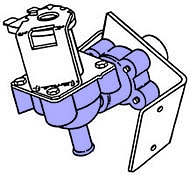
The fill cycle often begins with a short drain cycle to remove any standing water from the sump. Once that has occurred, the control powers the solenoid on the water inlet valve for a set length of time, to open and allow a calculated amount of water to fill the bottom of the tub. The water will usually fill to below the heating element. The element is not designed to be totally submersed in water.
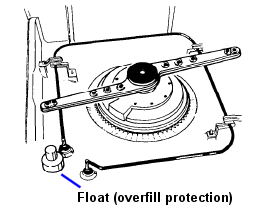
A float and float (aka overfill) switch are in series with the water valve coil solenoid and should the fill continue too long, will cut power to the water valve to stop the filling. On most models the float switch is not what controls the amount of water allowed to fill the machine. It is only a safety device meant to prevent overfilling and flooding should uncontrolled, powered fill occur.
It's important the water temperature be between 120 and 140 degrees F. during most of the wash cycle. A dishwasher fills only from the hot water supply but if the water in the dishwasher supply pipe is cold when the fill cycle starts, it may only become hot toward the end of the fill cycle and result in an average water temperature inside the dishwasher that is only around 100 degrees! In such a case running the hot water at a nearby tap until it gets to full temperature before starting the dishwasher is advised. The internal dishwasher heater will eventually raise the water temperature to the level needed for effective cleaning and sterilization but long delays in the wash cycle (called 'thermal holds') can result on electronically controlled models. On mechanical timer models, the cycle may be totally finished before the water temperature can increase sufficiently for proper washing.
Click the banner to visit our sponsor to purchase parts:
